

Their goal is to destroy everyone” — Uighur camp detainees.
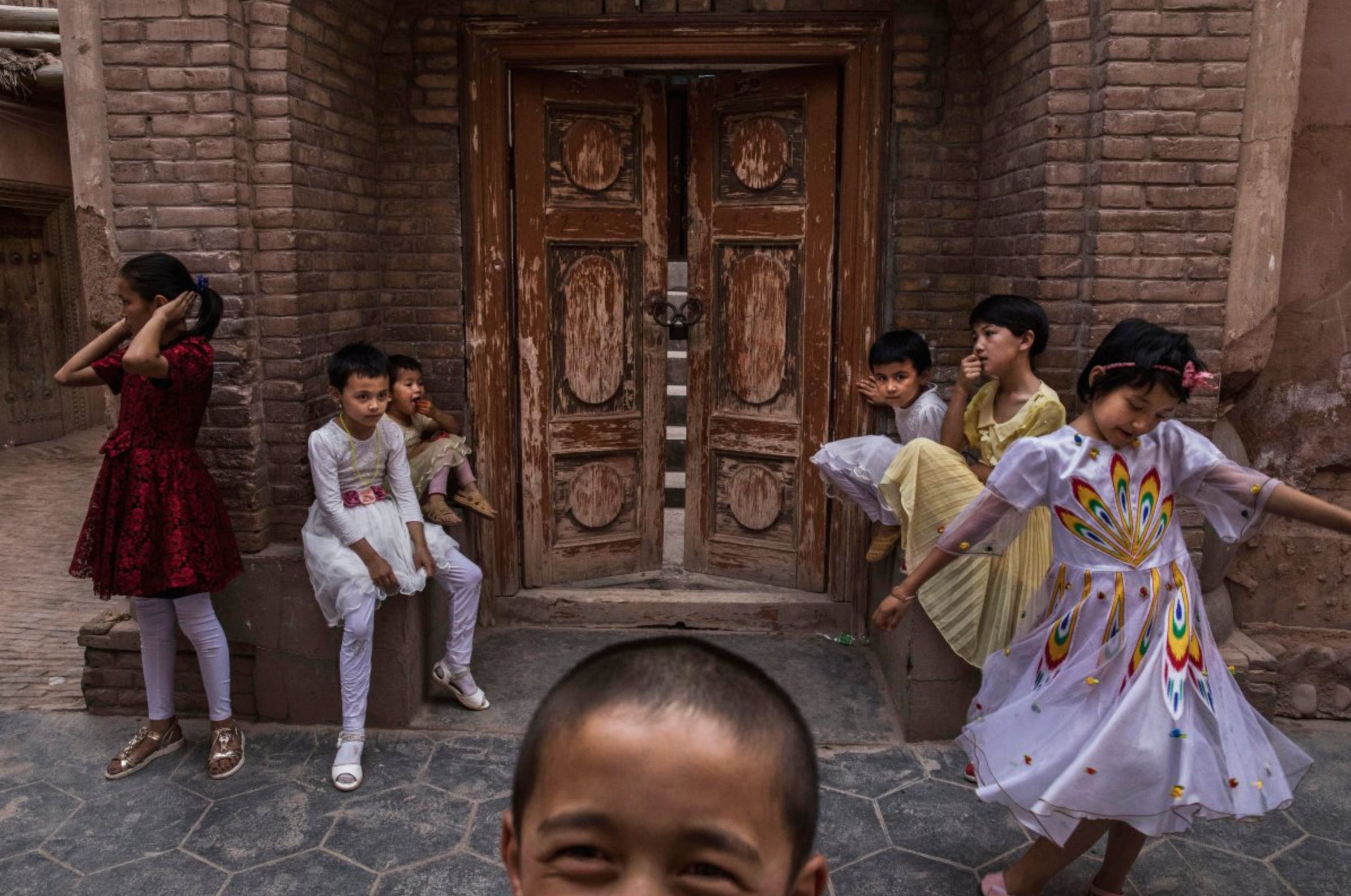
The war on terror was a blunt instrument that impacted large swathes of Muslim populations, including China's Uighur population. Like other similarly coined terms including the war on drugs, the war on terror didn't allow for surgical precision in how the world understands one of the greatest generational problems in modern history. A broad and often vague definition that didn't last the test of time, the proverbial war on terror offered plenty of room for interpretation, which authoritarian regimes have been quick to color in.
In his new book The War on the Uyghurs, author Sean Roberts traces the early days in the war on terror to spotlight how China exploited a small pocket of U.S. counterterrorism initiatives to cover their own agenda criminalizing the Uighur population. China successfully lobbied the U.S. to add a small group of Uighur militants in Afghanistan to the terror designation list. China previously viewed their conflict with the Uighurs as a local problem. Those problems surfaced over mass migration of Han Chinese into Uighur homeland, as well as Chinese refusal to honor peaceful Uighur protest over these and other grievances. After 9/11, China saw an opportunity to see Uighur violence with the same lens as al-Qaeda terrorism. China, then seen as as "responsible stakeholder," was granted an international nod to pin a label on its Uighur population.
Yet, as Foreign Policy explained, Uighurs have more in common with Rumi than Al-Qaeda:
"The region's Uighurs, most of whom practice Sufi Islam and speak a Turkic language, have long had their national ambitions frustrated by Beijing. The latest wave of Uighur separatism has been inspired not by Osama bin Laden but by the unraveling of the Soviet Union, as militants seek to emulate the independence gained by some Muslim communities in Central Asia."
But by moving this small group of Uighurs, the Eastern Turkistan Islamic movement (ETIM), onto a terror designation list, China lay the groundwork to later link the Chinese Uighur population as possible enemy combatants. China also moved from identifying a separatist movement as terror under Islam. Within that context came China's recent pattern of justifying a series of increasingly draconian "preventative" measures to counter extremism.

A cultural anthropologist at George Washington University, Roberts recently spoke with Axios explaining how the ETIM "did not have the resources or the capacity to do anything inside China...Though Uighur militant groups would later arise that did carry out a limited number of violent attacks in China, it was something of a self-fulfilling prophecy...in part the result of years of government repression after ETIM's designation."
Some of those attacks targeted Han Chinese, including 2009 riot where hundreds died and a 2014 stabbing that killed 31 passengers at a railway station. China blamed the series of attacks on Uighur separatists under ETIM.
As a response, China began forcing Uighur integration by forcing Uighurs to renounce Islam and embrace communist ideology. China opened up camps they referred to as 'vocational centers' aimed at countering radicalization in a faith China treated like a mental illness. As Roberts also describes in his article published with the Journal of Critical Asian Studies, the threat to China wasn't so much perceived 'Islamic' radicalization, the threat was biological. Leaning on the work of Michael Foucault, Roberts that the gradual exclusion of the Uighurs is "an expression of biopolitics where the Uyghur people as a whole have come to symbolize an almost biological threat to society that must be quarantined through surveillance, punishment, and detention." Roberts also delineates between state policy in China's 'war on terror' and what he says in the inevitable outcome of demonization an ethnic population as a threat under the banner of a global and obscure war.
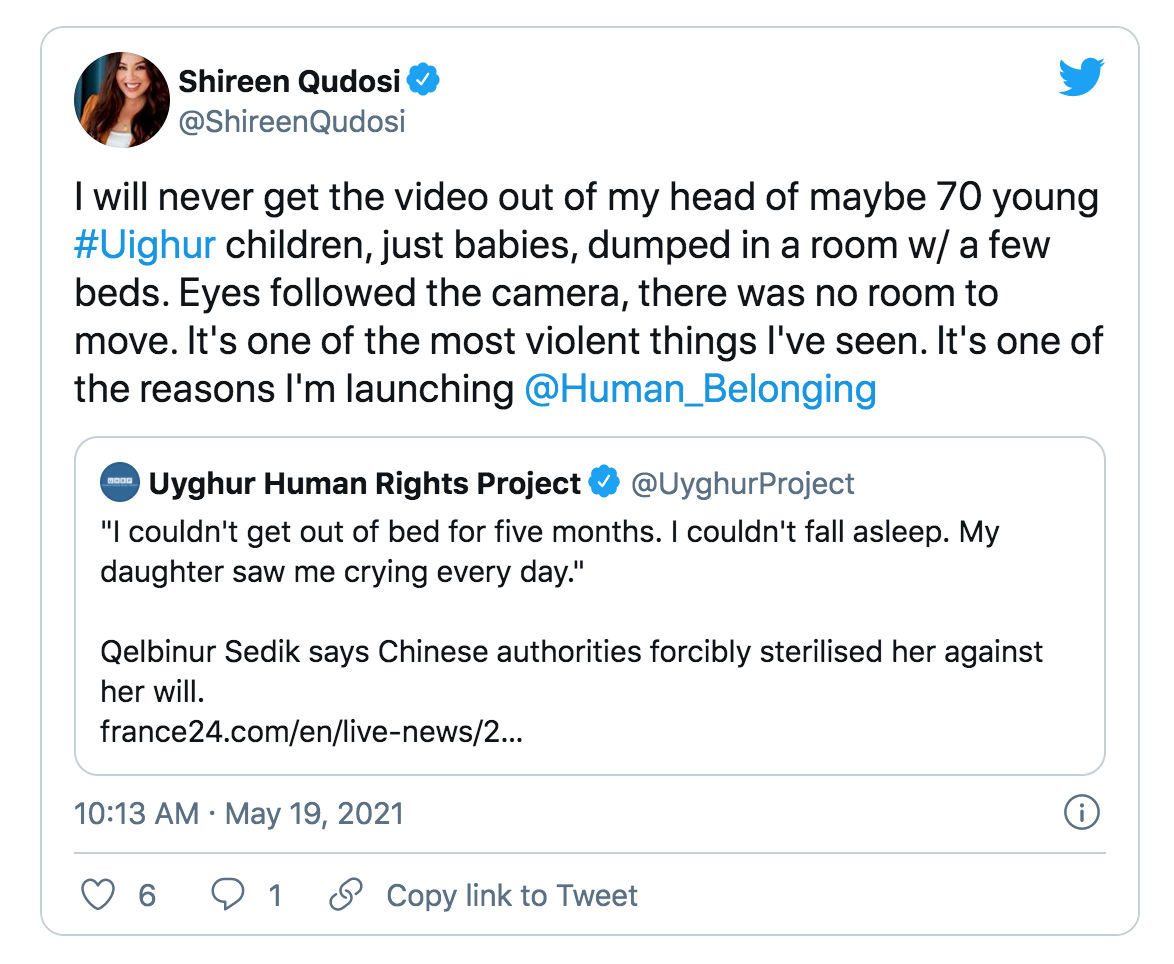
Over the years, the Chinese government placed a tight lid on the escalating situation in Xinjiang, the ancestral Uighur home in northwest China. Nonetheless, stories escaping the region paint a portrait of unmatched brutality and oppression including forced sterilization, forced labor, forced co-habitation, forced family separation. There are not words enough to describe how the language of war gave rise to the brutality against the Uighurs.
On November 5th, 2020, U.S. Secretary of State Mike Pompeo formally revokedthe designation of ETIM as a "terrorist organization" due to a lack of credible evidenceover the last decade that the ETIM still exists. Pompeo has also referred to China's mass incarceration as "the stain of the century."
While Beijing rejects the decision, the Uighur community has welcomed the decision, calling it "long overdue" and a "definitive rejection of China's claims."
"The harmful effects of China's exploitations of the imagined ETIM threat are real - 20 years of state terror directed at Uighurs." - Omar Kanat, Executive Director, Uighur Human Rights Project.
While some may blame the United States for enabling Chinese authoritarianism against its own population, the moral responsibility falls on China. For the international community, the United States included, the ongoing horrors against the Uighur population in China is a hard-learned lesson on the weight labels carry. In the rush to fight terror and extremism, labels were applied to individuals, organizations, and movements which didn't always warrant their designation. In short, as witnessed nearly two decades later, the rhetoric of war matters.
As Roberts describes,
"It has been the international obsession with combatting a vaguely defined 'terrorist' enemy that has allowed the PRC [People's Republic of China] to implement these measures with impunity and that, at least in part, has inspired their excessively brutal and genocidal nature."
Genocidal nature as a driving characteristic of China's authoritarianism is important to remember as the America moves forward with new leadership that will have to decide how it's going to engage the international community.