

Before a British Orientalist renamed it, a history of Islamic philosophers all referred to the controversial ‘Satanic verse’ in the Quran as The Story of the Cranes. The story has nothing to do with satanic influences. The Story of the Cranes is a story of goddesses as messengers to the divine, no more or no less divine than the breath we blow to the heavens after each prayer as Muslims. It’s a story of beauty, and a moment rich with grace.
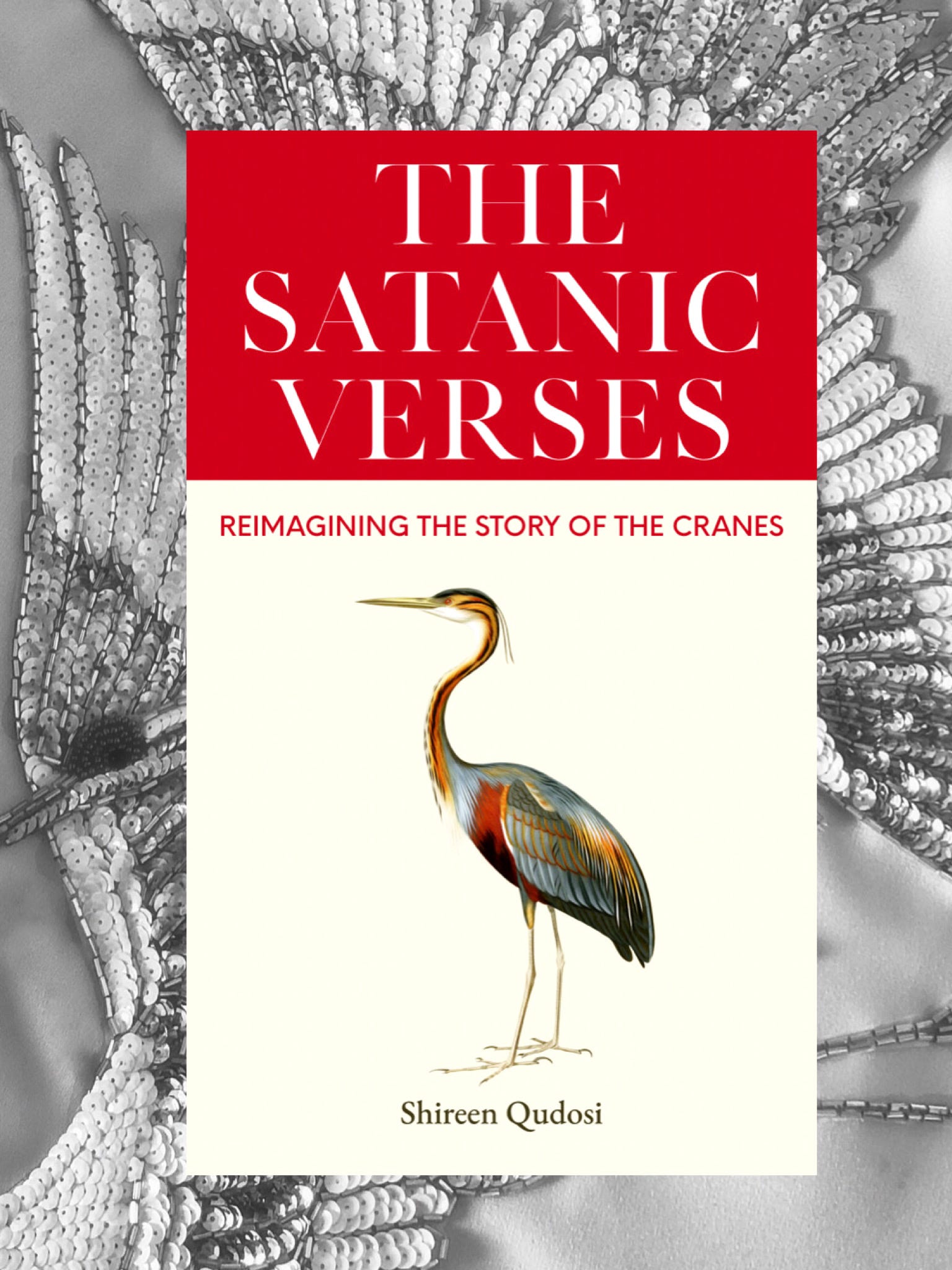
The Story of the Cranes (misnomered as the Satanic verses) speaks to the sacred feminine emissaries of the natural world. Birds as messengers in a beautiful and symbolic symphony of prayers ascending to the God of all realms. The Story of the Cranes is one verse among many in the Quran that speak to the dark feminine aspect of God, an aspect that unveils Islam as the unfurling rose rich with layers of hidden mysteries.
The Satanic Verses: Reimagining the Story of the Cranes is an essay excerpt from The Song of the Human Heart: Dawn of the Dark Feminine in Islam. Pulled as an essay from the broader work, Reimagining the Story of the Cranes offers a focused telling of the story of Islam around its most controversial and tabooed history.
For those interested in the Satanic verses, I pulled a significant part of the book that focuses exclusively on the controversy that won't die. The Satanic Verses: The Story of the Cranes covers:
1. Brief introduction to the back story behind the most tabooed verse in the Quran: the Satanic verses
2. Why Rushdie is so vehemently hated for his book by the same name, The Satanic Verses.
3. My personal opinion on the whole Rushdie affair
4. How we struggle to arrive at a shared truth about a distant past in the context of our own recent political past.
5. How the crisis of the Satanic verses was treated by early Islamic philosophers
6. The significance of the Satanic verse initially being called "The Story of the Cranes" by early Muslims
7. How the label 'satanic' puts the deeper crisis of belonging for women and the interfaith community
8. How the Satanic verses controversy is a gift to Muslims
9. How the Satanic verses are tethered to other passages in the Quran and across monotheism.
10. How my own personal life story as an early "Muslim Reformer" dealing with waves of hate from my own family made me sensitive to the chaos and confusion about something else that is also misunderstood, like this controversy.