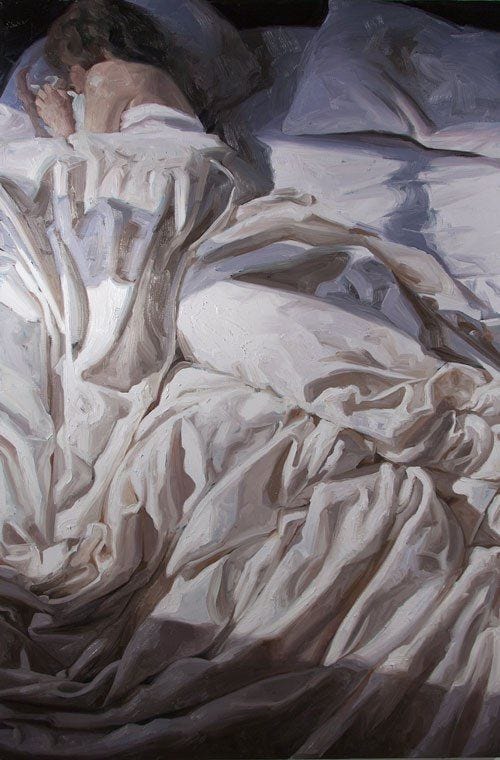
I always used to think the boys had it easier. They weren’t treated this way, in the gentle slow snuffing of breath until the wilderness of our heart is lost to us. Boys were treated with favor. But now I think they have it worse. It is easier to wake up from a nightmare than it is to wake up from a dream.
A wedding day, for just one day, before also joining the gathering of women, joining in the giving and receiving of recipes of servitude. I can still taste the dust of bones, of cement and death. I can still see so many of the women in these gatherings as headstones, cemented into a fixed distortion. One day, I was to be the newest sacrifice, the next headstone. The only tales I heard were musings that distracted from the depth of their own being, stories that chased away the heart’s calling. No one spoke of their death. No one spoke of life.
When in a collective of men and women, the gathering meant I had to serve the patriarchy. The conversations among the men were of the world, a world I wasn’t allowed to be a part of. Neither a woman nor a man, I was often in between, transformed into a scullery maid fetching endless cups of tea.
These gatherings were never for going in, but to reinforce all the ways culture expected to consume me. It was a training ground for defeat. And I complied. Because long before I was groomed to be defeated, I was groomed to be compliant. You cannot have a culture of the living dead until you first condition a child to give up his or her wilderness; until you teach a child to forget the drumbeat of his or her own heart.
I always used to think the boys had it easier. They weren’t treated this way, in the gentle slow snuffing of breath until the wilderness of our heart is lost to us. Boys were treated with favor. But now I think they have it worse. It is easier to wake up from a nightmare than it is to wake up from a dream.
Because you’re so conditioned, you don’t think to wake up to all the ways your soul riots through your body, through your self-sabotaging patterns, through all the ways you’re crashing against the world head-first. How could you when long before you could read, you learned to read the room on what was expected if you expected to survive the world, the only world you thought existed?
You wake up in other ways, through a remembrance that nudges your heart the way a horse gently nudges your shoulders or back when it wants your presence. Your heart nudges you in the discomfort you feel in the ordinary and mundane, through all the ways you start thinking there’s something wrong with you because you can’t fit in — and some part of you can’t force yourself to no more than you can hold your breath. Your heart is nudging you when certain things, certain events and patterns more than others, start making you feel like you can’t breathe. You learned to ignore a lot. You mastered even ignoring yourself. But you can’t ignore your own suffocation.
There were many of those moments, but none stood out so much as this Saturday morning as I lay in bed with these thoughts and memories flooding in as those dreary ‘wine and paint’ nights that had become so popular over the last few years, especially among middle-aged women. I still remember the excuses I used to make to not go to those, along with bridal showers, baby showers, graduations, and other ceremonies stripped of their ritual sanctity.
The wine and paint nights are perhaps the most symbolic of how the gathering of women has been distorted. It didn’t really matter which culture you came from — the pattern was the same.
The wine and paint nights are where the alchemy of being a woman and the temple of our gathering is reduced to the assembly line of steps with a lifeless pre-selected paint palette on a garish plastic cloth. The synchronicity and rhythm of the feminine lost to a culture of conformity, with women all following the same steps under harsh lighting and cheap wine, under the illusion of expression in community.
Wine and paint nights — even the picture of them across social media with women proudly displaying the bastardization of art, of feminine expression, of gathering, all believing this was freedom of expression, bothered me so deeply. I saw those images and felt it no different than scenes from a history book where uniformed women shrouded in a distorted ideology — soldiers, nuns, and school mistresses — colonizing the wilderness of indigenous people whose entire breadth of being was distorted into a form not their own — not unlike the ‘art’ being held by these women. I looked at that scene and felt like I couldn’t breathe.
This is a good thing. The discomfort is good. This is a sign that life is working its way through stone, that beneath the skin of faith and identity, there is a self that remembers it’s alive and it needs to stretch and move, cry out and open its eyes in all the ways you do when you’re born.