The questions of a first meeting or first contact can only go so far in the upper world of human relationships. Below the surface, in the space between things rich with song, we find a more honest conversation within and outside of ourselves, cultivating a deeper intimacy of what it means to be human and in relationship with the world. The song tells us that we are not alone, even and especially when we are alone.
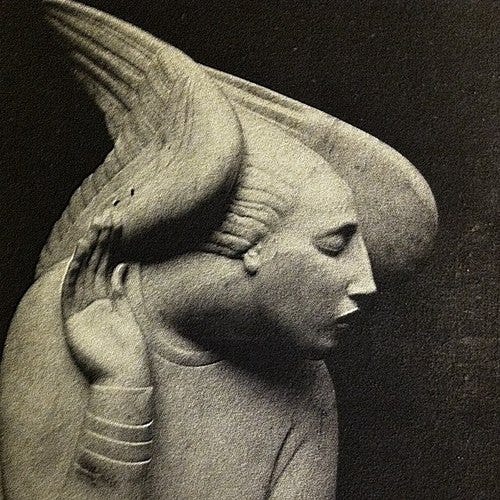
The wilderness can often speak more eloquently to what stirs in our hearts. What sings, howls, creaks, or growls offers an expression beyond the limitations of words. What sings in the dark, sings to the night. Another world comes alive in the darkness, where the symphony of the night is not just what song calls to you, but what song you find within you.
— The Song of the Human Heart: Dawn of the Dark Feminine in Islam
As a highly sensitive and neurodivergent woman, I’ve always struggled with the world of people. It feels like every decade we move more into artificiality, manufacturing unnatural grids through which we route the wilderness of human expression. Like a ship sailing in the wrong direction because it forgot the song of the sea.
How do we remember that song? How do we remember the wind and the sea both sing the same song as our heart, carrying a crescendo that falls and rises threading a conversation with every pulse that speaks in a language older than the tongue?
It’s taken the world’s greatest sages radical time away into the wilderness to be able to find an inner truth that sings to them. Most of us are no great sage, and our challenges today are perhaps more extraordinary because our distractions are more numerous. Without some other anchor or practice, it can become very disorienting to navigate the world and its people. Imagine a compass spinning erratically struggling to find North, a true direction in which to chart a path forward. Now add in the simple truth that people change; they have their own ups and downs, cycles and seasons in life. Nothing — absolutely nothing — is static except change (as the saying goes).
In the midst of the chorus of the outer world, how can we find the balance of our inner calling while also listening for others? How can we find the song within us, and between us?
The emptiness of a blank page offers the spaciousness I struggle to find in the scaffolding of civilization. A spaciousness that says here you can ease the burden of your sleuthing, your need to hold a lens to one eye and peer closely, to watch where you’re going so you don’t fall, to see what you might miss if you don’t look closely enough. Here, the spaciousness is a wilderness, wild because offers the only thing a wild thing needs: the spaciousness to sway in the rhythms of the eternal cosmic dance.
A deep, meditative practice, writing is a way to be heard and to hear myself. A way to call out into the wilderness of my own heart and see what calls back. To find the song that is always wildly spinning whose tune I hear only in the moments where I don’t have to look so hard, and can begin resting into listening.
It was only recently that I realized that the drama of this sort of searching was not normal in our society. It’s reserved for other sensitives — poets, empaths, people who for whatever reasons through either culture or crisis longed for fulfillment through deep synesthetic belonging.
What if what I and so many others are looking for is a way to return to the wild, to a sense of human belonging that is beyond the grout of the conditioned social behavior of the hour?
In the year that I spent immersing in the Dark to develop The Song of the Human Heart, conceptualizing how to tell a very complicated story of faith, identity, and belonging, what felt most true is that beyond the story of us, there is the song of us.
The song informs the story. The song speaks more truthfully about the nature of the world and about us. The song of who we each are as people offers a type of grace, understanding that all music is a form of animated variation in flow — a tune that can fall in or out of harmony, hold form or change forms at any given point.
A song is a vessel for the story of us.
And when we find our song — whether it is our song or the song that exists between people — we find a more authentic expression of the human experience.
The first time I noticed the relational power of song, or song as a more intelligent tool for understanding ourselves, was in the film Frequencies (also known as OXV: The Manual). It’s a curious little independent film best suited for lovers of linguistic puzzles, as the story follows two very different characters who each in their own way unlock the mystery of another world where worth is determined by frequencies. In the scene below, our main character learns another way to speak or be in relation with the world of language, aided by a master musician.
The scene is reverent. The authenticity of these two characters, their courage and willingness to trust each other as they use the keys of piano to unlock a deeper way to build on human intimacy.
Imagine the sea teaching the ship how to sail across its waters.
So much can be said for how music speaks to us and how the creation of song weaves the chords of relationship within and without our shared reality, shaping how we relate to the world and to each other. This is especially true for the times in which we cannot speak. Where we lack the courage to speak, the song becomes our tongue.
In the series Last of Us, Season 1 Episode 3 featured a captivating episode masterfully led by Nick Offerman. Just like song that rises and falls into depths of emotion, the episode uses alternating rhythms to frame an extraordinary vignette that uses music as a threshold for a first real meeting. All the notes of his character leading up to that scene laid the foundation for the breaking of ground where we first meet the person beneath the surface, where the audience listening first meets him beyond the veneer of persona, and perhaps even where we first meets himself. There is nothing that could have been said or done differently to express his beauty. Nothing but song would do; nothing but song could be true.
What is it about music that allows us to break the barriers we have within ourselves, and through that break the barriers that stand between us and another person?
In my book The Song of the Human Heart, I explore my own experience with this. My first meeting with the West was through music as was my first experience of what it could mean to be American. At each point music always served as a gentle priestess guiding us through the dark of new territory with a siren song that called to our hearts.
The questions of a first meeting or first contact can only go so far in the upper world of human relationships. Below the surface, in the space between things rich with song, we find a more honest conversation within and outside of ourselves, cultivating a deeper intimacy of what it means to be human and in relationship with the world. The song tells us that we are not alone, even and especially when we are alone.
Your great mistake is to act the drama as if you were alone. As if life were a progressive and cunning crime with no witness to the tiny hidden transgressions. To feel abandoned is to deny the intimacy of your surroundings.
Surely, even you, at times, have felt the grand array; the swelling presence, and the chorus, crowding out your solo voice.
— David Whyte, “Everything is Waiting for You”
Written during a time of great bereavement, in his poem “Everything is Waiting for you” poet-philosopher David Whyte speaks to the intimacy of our world, an intimacy that is ever-present but often unseen. Just like a children’s story of toys that come to life when we aren’t looking, there is the very real presence of life beyond the periphery of our day to day — life brimming with songs if only we have the ears to hear them. In very much the same way, I hear the Song of the Mystery, falling into the steam of song when I surrender to the spaciousness within — and through that finding another world alive and brimming with conversation.
In his brilliant podcast The Emerald, Joshua Schrei speaks in waves to the animacy of the world — a world that is always humming, a world in which everything is singing. In the episode “Inanimate Objects Aren’t Inanimate,” Joshua invites us to consider the human as a vehicle for the animacy of things to express itself in its fullness. He asks, “Who makes who? Are we the instrument maker or the instrument?”
It’s a question that expands the horizon of relational reality:
What if we’re not simply invited to listen to the song?
What if we’re invited to become of it?
What if the human experience is an instrument for the song, that plays the song — shifting our relational reality from life that observes, to life that participates?
How can that instrument become a vehicle, and toward what destination?
How can we even begin to speak to an idea this large without sounding completely mad? How can we seek language that is large enough to map this Dark territory?
For David Whyte, poetry is a search for language large enough in the same way that I feel song is language large enough — though poetry and song are in some ways of the same tongue. There is song in poetry and poetry in song.
Still the question is, language that is large enough …for what?
James Bridle, artist and author of New Dark Age: Technology and the End of the Future, believes that intelligence is singing all around us. He invites us to expand our definition of intelligence, in part as a way to cultivate a tool to envision an alternative future framework.
What does it mean for intelligence to be singing all around us? The idea that intelligence sings cracks older paradigms that limit intelligence to left-brain logic (which is a particularly recent development in human anthropology). To consider that intelligence sings instead of calculates is to invite us into a broader unfolding reality of life and our place in it.
I think you’ll agree with me that no matter what our background or beliefs, we are all yearning deep within us for something greater — like a memory of something lost but we don’t know what exactly or where we lost it. Yet, we feel the presence of something missing through its absence. Song can help us remember, like the song a prayer becomes when we feel like no other language can fill the gap of our need. The way that a cry becomes a song when we feel nothing else will soothe us. The way grief unleashed will have us howl and wail when the anima within us feels it can no longer hold back its wild song.
Song can be a thread between what is lost and what is trying to be found.
The point of that meeting, that first contact, is in all the ways the needle that spins the record. It is the arrow on the compass that marks true North.
The melodic beauty of song when fully received in the spaciousness of our surrender is a key that opens the door of the heart.
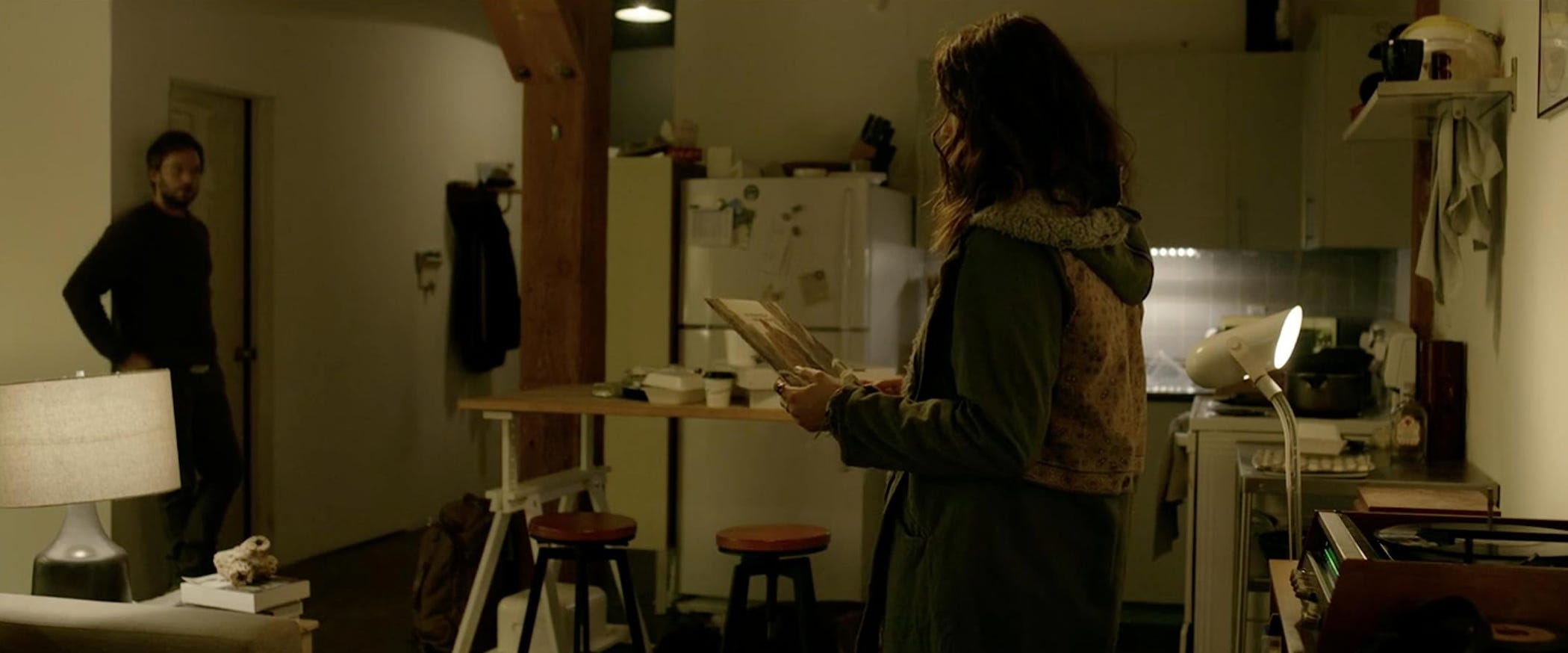
In the film Clara, music was the thread that brought two very different people together creating two points of first contact — one earthly and one other worldly. The reverence for song created a doorway later used to bridge words reminding us that we are not alone. The film invites us to a broader idea that beyond the logic mind, beyond our math and sciences, the language of the heart is perhaps the only thing that can bridge worlds, as well as people worlds apart. Music is an anchor that takes the noise of the surface world and spins it into a golden song.
Whether literally moving between outer worlds or within our own small worlds that only we are privy to, there is a type of bridge that only song can create through the intangible webbing of its frequencies.
If you appreciated reading this Substack, please consider subscribing or making a one-time donation.
Get your copy on Amazon or at www.shireenqudosi.com