

“God is great” is not an extremist chant, nor does it have anything to do with Jews. How it is misappropriated by believers is a separate issue, but more to the point, the comparison of Charlottesville to Palestine tries to do what has been the gold standard of intersectional activists in the last few years, something often referred to as “Memory Diplomacy,” a new type of soft power that constructs historical narratives that cater to the memory of culture of sympathetic groups, which then willingly reproduce those narratives.
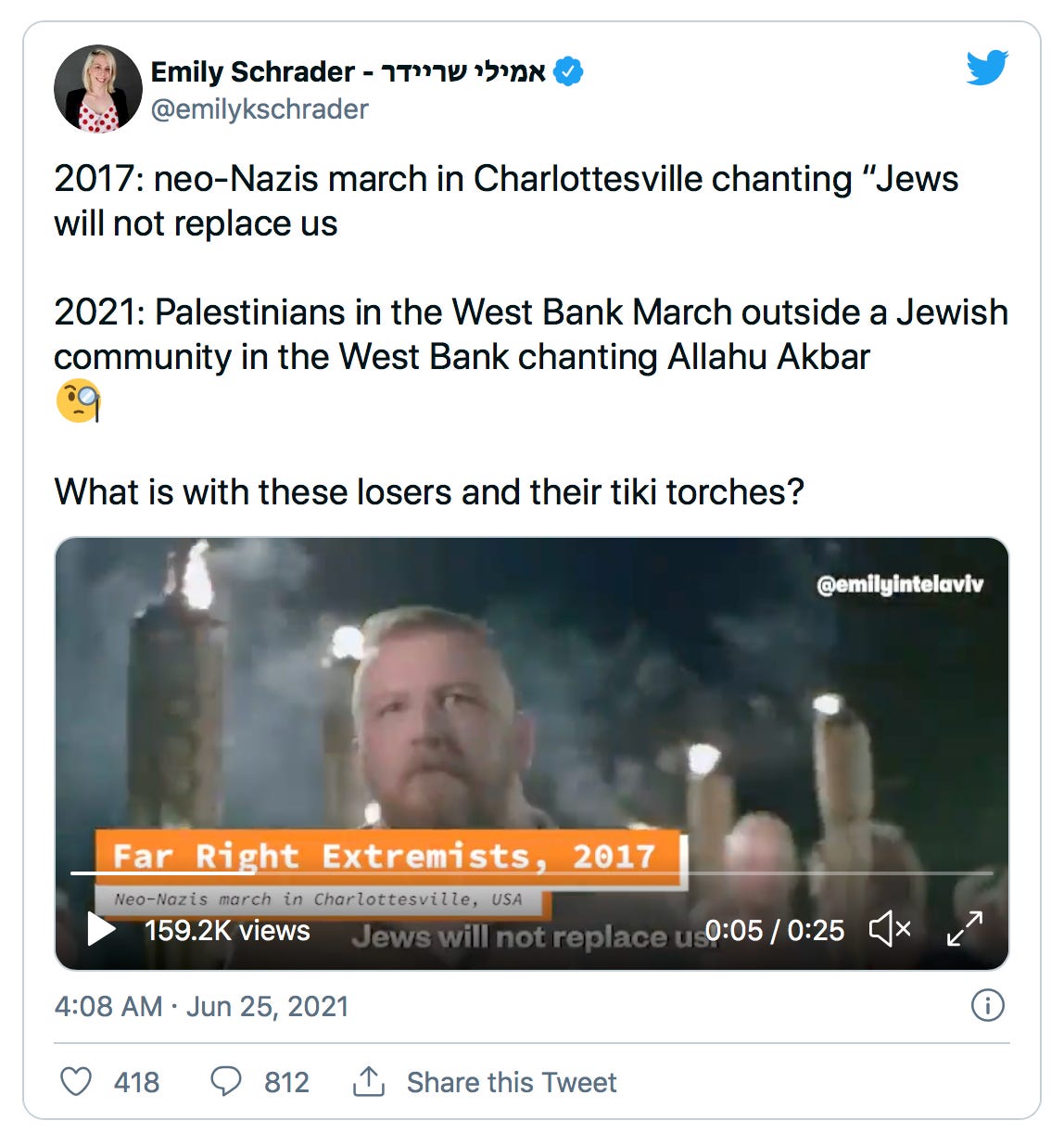
Jewish activist Emily Schrader received considerable backlash on Friday, June 25th, for equating the 2017 Charlottesville neo-Nazi march with Palestinians also holding tiki torches in a march the same year. The tweet was likely expressed now, nearly four years later, as we’re seeing a rise in hate and polarity in the Middle East between Israel and Palestine over what (this time) started out as a territory issue over Sheikh Jarrah.
Her tweet was grossly disappointing but not surprising given the cocktail of limited understanding of Islamic theology, paired with an undeniable rise in anti-Arab and anti-Muslim sentiment in the aftermath of the May 2021 raid on Al-Aqsa by Israeli security forces. (The raid on Al-Aqsa became a sharp defining moment in the region’s volatile history that shocked many around the world as a sacred site in monotheism and its worshippers were attacked under the guise of security. No evidence was ever provided by the IDF that justified the attack.)
Neo-Nazism is an ideology rooted in supremacy. The Palestinian response to regional events are not so simple. They are first a people, many of whom self-identify as Muslims. While individuals and terror organizations manipulate the Islamic faith to advance their cause, it is also true that Palestinian hate and anger toward their Jewish neighbors is also due to serious human rights violations against the Palestinian people. Meanwhile, Israel is not free from producing its own extremists. No side in this conflict is completely innocent, but neither Judaism or Islam should be compared to notorious hate-fueled ideologies such as Nazism.
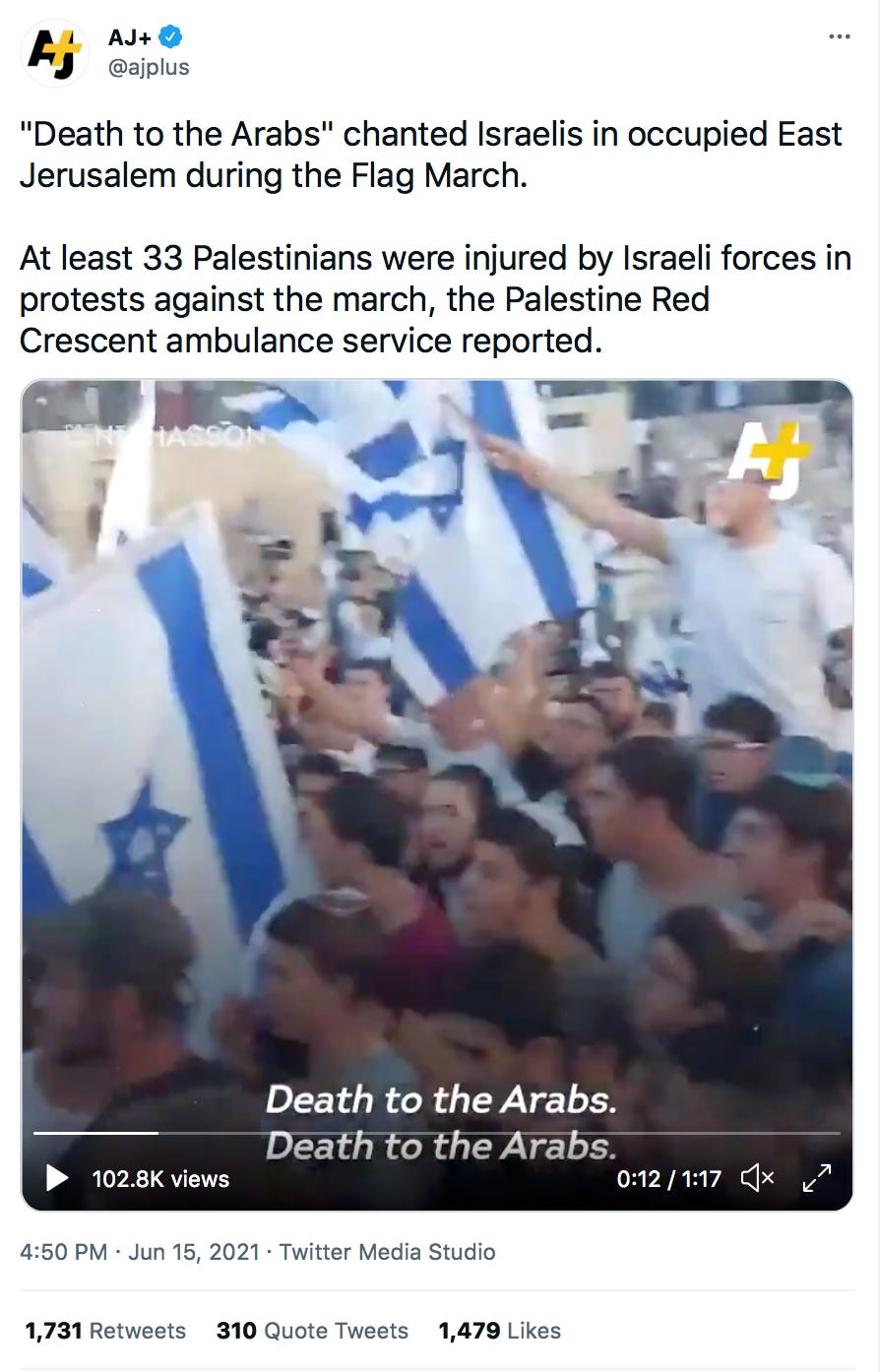
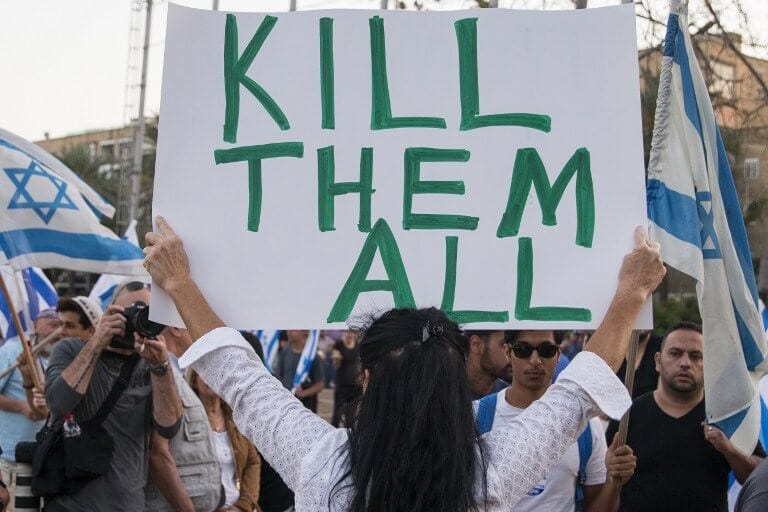
It is absolutely hateful to equate neo-Nazism with an Islamic verse (Allah Akbar), which literally means “God is Great.” While the phrase is known in popular culture as the last death cry of Muslim extremists, its origin carries a deeply spiritual context that for the majority of Muslims is an expression of faith — that we do not have control over the Earth, whether the sun rises or the moon falls, it is God who is the keeper of the heavens and earth.
“God is great” is not an extremist chant, nor does it have anything to do with Jews. How it is misappropriated by believers is a separate issue, but more to the point, the comparison of Charlottesville neo-Nazis to Palestinians chanting Allah Akbar is a soft equation of one to the other, and grossly misleading out of either ignorance or intent.
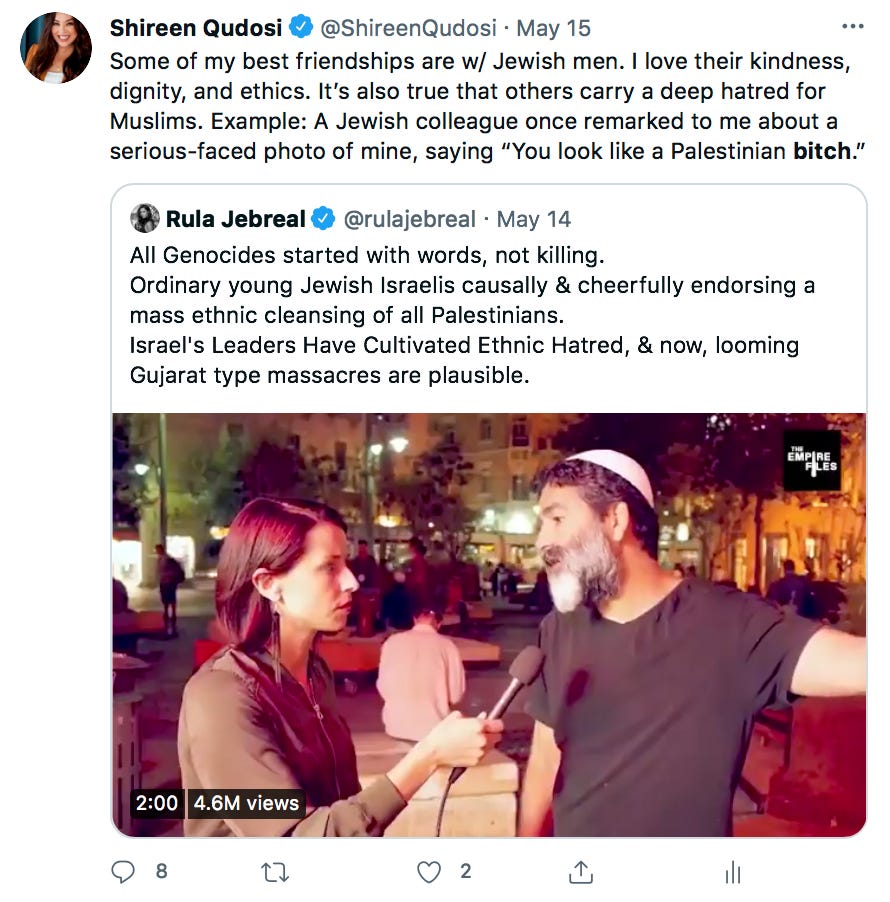
And what of the Palestinian tiki torch march? The intentions of the 2017 Palestinian march are not known to me. I wasn’t there. I’m confident there is genuine Jew-hatred among some (likely many) of them, but there is also deep grief of being treated as sub-human. I’m neither Palestinian or living in the biggest open air prison on Earth known as Gaza, but I’ve experienced the same anti-Palestinan / anti-Muslim hate first hand.
“God is great” is not an extremist chant, nor does it have anything to do with Jews. How it is misappropriated by believers is a separate issue, but more to the point, the comparison of Charlottesville to Palestine tries to do what has been the gold standard of intersectional activists in the last few years, something often referred to as “Memory Diplomacy,” a new type of soft power that constructs historical narratives that cater to the memory of culture of sympathetic groups, which then willingly reproduce those narratives.
Most Americans will anchor to the memory of Charlottesville’s tiki torch march. Charlottesville was the first national news story of white supremacy in recent memory and it put white supremacy on the map as a domestic terror threat. That threat has been amplified by the wave of sequential events through Jan 6th’s insurgent attack on the capitol.
A visual one tiki torch group with another creates a ‘memory bridge’ using recognizable identity markers between one known event and one unknown but similar event.
None of this is to single out Schrader or suggest what was likely a quick, thoughtless tweet was any kind of intentional propaganda. Schrader’s example is just one example. On the flip side, American Islamists did the same during the Standing Rock (Dakota Pipeline) protests by aligning themselves and the Palestinian cause with Native American sovereignty rights. Since then, there hasn’t been any word or care from Islamists about the litany of indigenous rights issues that surface again and again.
What is packaged as allyship can be camouflaged polarity.
Further to the point, not taking the time to invest in studies (especially when clumsy statements conflate an entire religion with the actions of a few) furthers polarity — the gap between self and other, between communities and people. Worse, it fuels the extremist cause and ignores the bigger more serious problems we have about how anti-semitism operates.
To be continued next week….