

I love the way stories more truthfully tell us about the world than the growing babel of language that says everything yet nothing at the same time. It invites me to question what our name would be if the entire sum of our identity was not anchored to a name that was given to us at birth, inherited, or assigned in employment and so forth — a mythopoetic identity. In the film, that identity rose from what she was able to do when she embraced her storm. She was a King Finder.
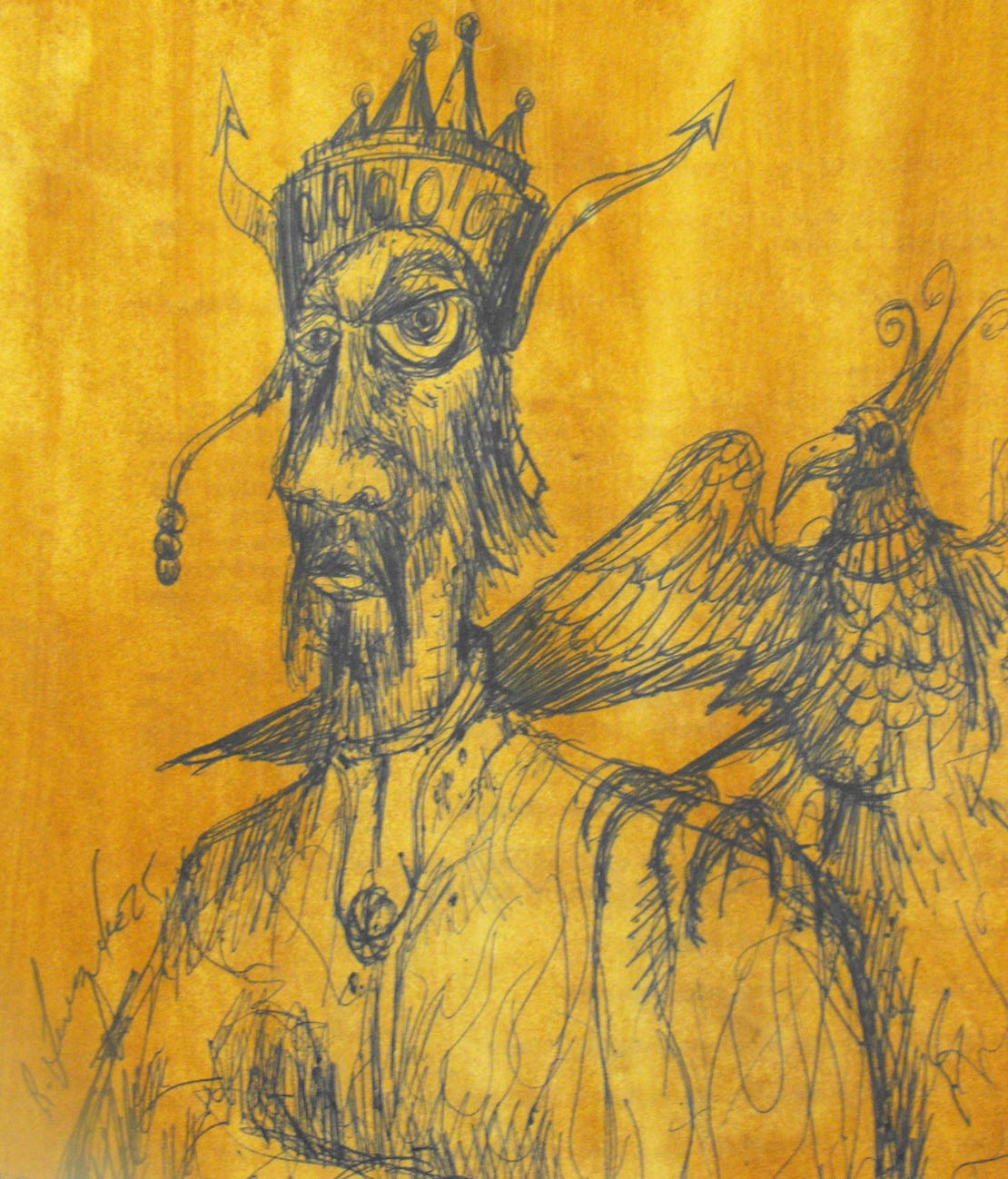
I hadn’t been as active in publishing here because it’s been a difficult couple of months after publishing my first book, The Song of the Human Heart: Dawn of the Dark Feminine in Islam. Publishing this work didn’t just unearth what was buried in the proverbial dark for so long in terms of a lost faith; it also unearthed what I had ignored for so long: I was also lost. All this time I was writing this book, but this book was also writing me.
For so long, despite so much evidence to the contrary of never being understood, accepted, or belonging to the family I was born into (and less and less the more I stepped into mastering my own story), I kept trying to squeeze in. I kept trying to stick in a character and a plot that didn’t belong in the story of that family. Imagine Odysseus trying to wedge his way into Harry Potter or vice versa. I kept trying to be understood or seen, trying to introduce a Greek tragedy let’s say to folks who were just interested in some teen pop magic. You get the idea. It hadn’t been working for a long time, but seeing the reactions I got to publishing this work — the mistrust, dismissal, and even jealousy — it became clear to me. I needed to walk away. I needed to stop trying to force this story of me onto them.
While normal writers have teams that support them in a ceremonious book launch, I had more of my old life die off, more of what no longer belonged falling away. Of course, it would go that way. You don’t write a book, or it doesn’t write you, and then the plot just stops after you hit publish. The story keeps spinning.
For a first-generation South Asian immigrant woman, that’s not easy to do. Our entire identity hinges on our family, paired with being raised with a sense of responsibility toward that family, to always be available and to be of service. This expectation that I adopted has in one way or another always clashed against the raw fiber of my being that can be described simply as a storm. A storm with a voice.
“A storm is an elemental dance — beautiful to watch.
A storm that tries to be part of a hot summer day is no longer a storm.
No one stops to watch a hot summer day, but a storm is magnetic.
A storm captures our attention.
You want to watch it. You want to see what happens next.
A storm that tries to stop being a storm is no longer the same majestic force of nature.” — Shireen Qudosi
And just like a storm brews, this ‘soul brew’ extends beyond blood family and toward work families. It also became clear that I no longer belonged to the crew of reformers and activists, being cut off from donors, ignored by colleagues, and disinvited from talks when organizations learn that I speak to a narrative beyond the dichotomy of some bad Muslim (or bad Islam) vs. good West.
“Stories are the most important thing in the world. Without stories, we wouldn’t be human beings at all.” — Philip Pullman
Nothing in a good story is ever as simple as good vs. bad, yet we’ve largely boiled all our activism and efforts down to the simplest uncooked strands of storylines that run like ley lines across the landscape of our consciousness.
None of this is a complaint, but rather a confession and perhaps a bit of advice:
When things aren’t working out, you’re forced to reckon with what it is you really want. You can silence a storm no more than you can silence the drumbeat of a woman’s heart.
Finding that voice and learning to wield that storm has (and still is) like learning to take the wild erratics currents of a force of nature and tenderly shape it into a dance, into a choreography that doesn’t destroy everything in its path, but is a presence that stirs something within observers and reshapes the landscape in some way. The hearts of many women that I’ve been connecting with over the last year feels like a storm that is lost, like hurricanes spinning across a landscape wildly searching for something.
The themes of finding what is lost, seeing beyond tarnished reputations, following our heart’s calling, and walking away from what is normal or expected — all these themes were found in the film The Lost King, a comedic drama inspired by true events. The film is inspired by news headlines that read: “Mother of Two from Edinburg finds Lost King in Car park.”
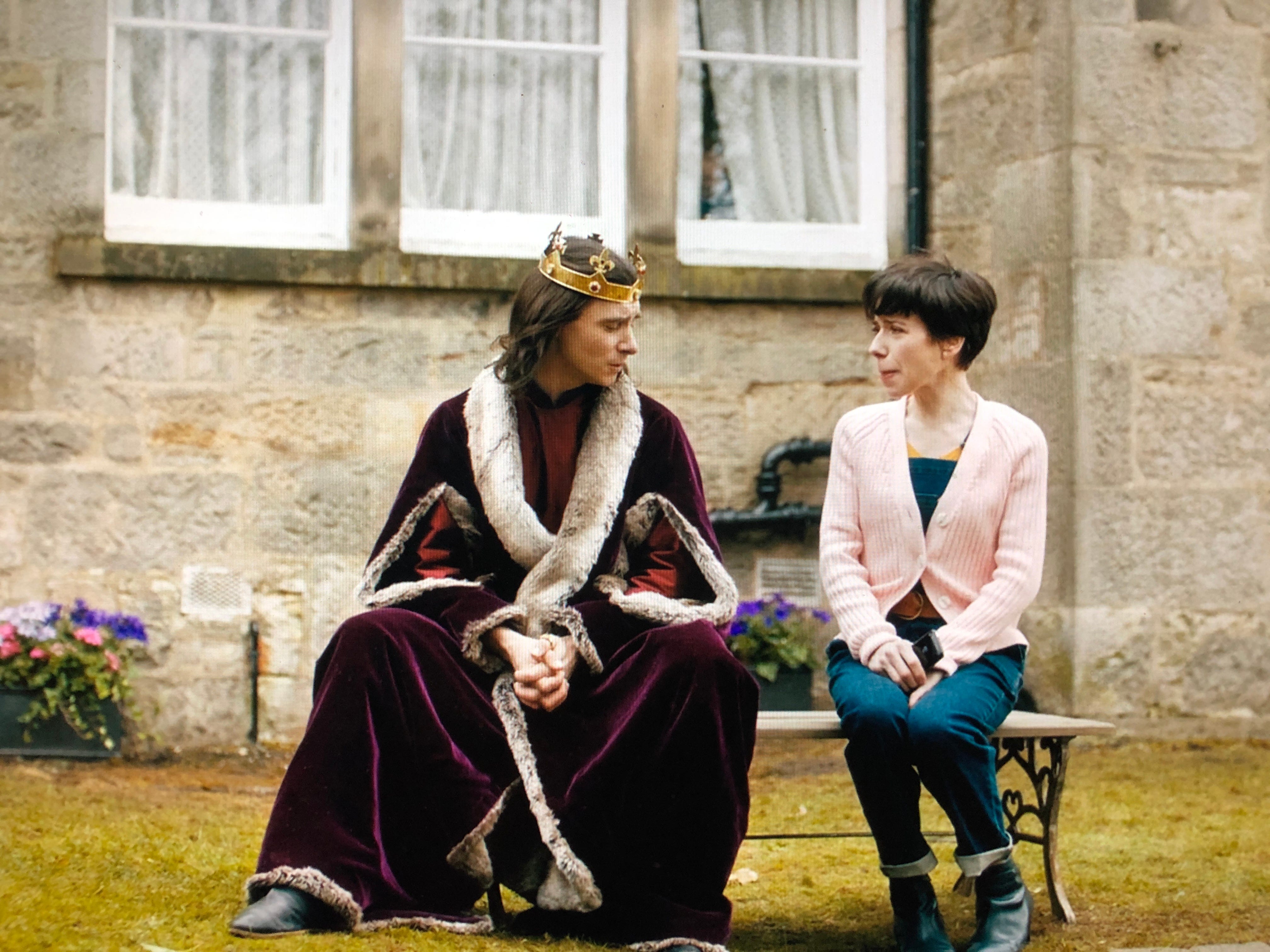
Directed by Stephen Frears, the plot follows the real-life adventures of Philippa Langley, who in 2012 discovered the remains of Richard III, a controversial monarch in British history who is suspected to have been painted with more cruelty than what was true. Without giving away the plot, I was called to write about this film which at almost every step of the way ran a course parallel to the events in my own life over the last few years. There is a mystery, an adventure of sorts in the life of a woman who is an untrained historian who runs on “feelings” and is hindered by physical challenges. It’s a story with a happy ending of sorts as far as a happy ending is possible in British films. But more than that, it’s a story about finding the courage to search for what is most important to us, marked by the stirring we feel in the embodied self, even (and especially when) that treasure is buried and requires a bit of a dig.
I adored the subtlety of the film’s storytelling. There’s an undeniable sense of adventure in the pursuit of a mystery that isn’t obvious in the way typical films. There is no sensational landscape or costuming, no special effects, nothing that forces your attention. The landscape — despite the cross current of history and the modern day — is most definitely us. It’s not just Philippa who is on a quest, but in so many ways, all the people she meets along the way in pub meetings or scattered across the globe who carry a question that brings them together in uncovering a mystery.
“The fallen King’s famous spinal curvature, are almost literally shaped like a question mark” — TIME Magazine
While her ex-husband comes to support her showing the promise of non-conventional families, the rest of her tribe of co-workers and friends fall way over time as she embarks on this question in her heart of who and where is Richard the Third. And she goes about it being somewhat of a nobody as far as academia or standard institutions go, bypassing (along with her budding new tribe) the traditions that establish themselves on the foundations of an identity that is of stone and concrete rather than dirt and mud — an organic identity that is below the surface of certainty.
For Philippa, there is no pedigree of degrees or training — just a “feeling” as she repeatedly shares. This was particularly beautiful to see: an on-screen admission that a lost treasure of our origin story can be found through a woman’s intuition. As the film shows and the true story tells us, it was more than just a feeling but an embodiment. Philippa physically felt stirred, overcome by emotion, when she stood above the lost gravesite of Richard III.
“If you’re a woman over 40, unattractive so to speak, and suffering physically in some way — you’re completely invisible to most people. Being invisible can be a gift. It offers space to move under the veil, beyond anyone’s line of sight, and without their intrusion.” — Shireen Qudosi
That wasn’t the only time feelings were plentiful in the film and our heroine. Philippa suffered from illness including chronic fatigue, giving her little option other than to embrace a vulnerability people are typically shamed and excluded for. It was that pairing of the frailty of the body with the frailty of identity that sparked Philip’s interest in Richard III, who shared her fate and was painted as a villain both physically and of character. Though I’m not sure what’s worse: being seen as a villain or not being seen at all.
“A twisted spine doesn’t mean a twisted personality.” — Philippa Langley
What I treasured most about this film is that it normalizes another way of seeing, not just as whimsy but as a pathway to something tangible that changes the landscape quite physically. The Lost King is most obviously in one way a story of the fallen sovereignty of a king, but also of us as women. We’ve lost the sovereignty of our own being to the charade of the workplace, the expectations of those around us, and the barricade that other people’s opinions become in our lives. Through all that noise, there is a simpler way of being, which Philippa’s two boys pronounce upon finding the gravesite of the lost king: King Finder.
It reminds me of the stories of older times when the names we gave people were simpler and more truthful. Whether it was our name based on our own personal legend or the name of the blade we carried, we commanded a name that was more true to our identity than the titles and labels amassed through the precise performance of an array of tricks (as is the case now to secure a degree or a position). In that simplicity there was truth. That’s what I’ve always loved most about stories, an art form I’m completely enamored by.
I love the way stories more truthfully tell us about the world than the growing babel of language that says everything yet nothing at the same time. It invites me to question what our name would be if the entire sum of our identity was not anchored to a name that was given to us at birth, inherited, or assigned in employment and so forth. In the film, that name rose from what she was able to do when she embraced her storm.
“The healer’s gift is her own wound. It’s the source of empathy and true understanding of compassion and forgiving. To heal thyself, embrace your wound as your sacred teacher.” — Unknown
In all the ways, ultimately the film speaks to the gift of the wounded healer, a phrase I have heard often in the last several years but didn’t understand until all my wounds, my ‘soul brew’, was poured into the first of a series of books in which the wound became the medicine. In Philippa’s case, the wound was also her literal physical challenges but also (at least as portrayed in the film) a life that in some ways felt like a wound. It felt like a wound through all the structures we accept as a normal way of life, as her husband speaks to several times.
What is “normal” other than dancing around the bars of a cage? If we accept the rules of that game, we can become managers, directors, famous, influencers, maybe rub elbows with other successful cage dancers, and perhaps even become rich— but it will never allow us to become legend. It will never allow us to rise sovereign in our own lives. It will always see us and pin us through the eyes of something very foreign to our own hearts: other people’s opinions, be it rumor or finely crafted historical propaganda.