
“Where the Dark is the Other Eye of God.”
Welcome.
If you’ve found your way here, you may already suspect that the world is stranger, more beautiful, and more mysterious than we’ve been taught to believe.
Era Darkheart is a living cosmology—a place for exploring the landscapes where wonder, myth, sacred tradition, beauty, and the human heart meet. It is an invitation to inhabit the liminal: those threshold spaces where certainty loosens its grip, perception deepens, and new ways of seeing become possible.
For years, my work focused on extremism, Islam, politics, and culture. Those subjects remain important to me, but over time I realized they were never separate interests. They were different doorways into the same enduring questions:
What makes us human?
What stories shape our lives without our realizing it?
What happens when we lose our capacity for wonder?
How do we find our way home?
What does it mean to belong—not to an ideology, but to reality itself?
These questions eventually became the architecture of Era Darkheart.
A Way of Seeing
The work here is guided by what I call Editorial Mythology.
Editorial Mythology is the practice of reading contemporary life through the enduring patterns of myth, symbol, and the human heart. It begins with reality—with history, evidence, and careful observation—and then asks a second set of questions:
What deeper story is unfolding beneath the surface?
What hunger is this movement answering?
What forgotten symbol is returning?
Rather than escaping reality through mythology, Editorial Mythology uses mythology as a lens to see reality more fully.
The Rooms
Era Darkheart is organized into a handful of living territories.
Wonder explores perception, beauty, and the mystery of being alive.
Songlines follows the invisible maps that orient us through life.
Dark Islam returns to the symbolic, mystical, and forgotten landscapes of sacred tradition.
Extremism examines what happens when certainty eclipses wonder and the human heart becomes captive to ideology.
Night Walks is where ideas become lived experience through stories, symbols, and conversation.
Oracular is devoted to cultivating symbolic perception, intuition, and the disciplined art of learning to see.
Each room is a doorway into liminal territory. No matter which room you enter, you’ll encounter the same enduring currents: the human heart, belonging, beauty, time, attention, home, and the quiet work of remembering.
An Invitation
I don’t believe we need more information nearly as much as we need deeper perception. The hope of Era Darkheart is not to provide certainty, but to cultivate attention.
Era Darkheart is less a publication than a place. It’s a place to think more deeply, to see more symbolically, and to remember that the world has always been speaking.
Meet Shireen
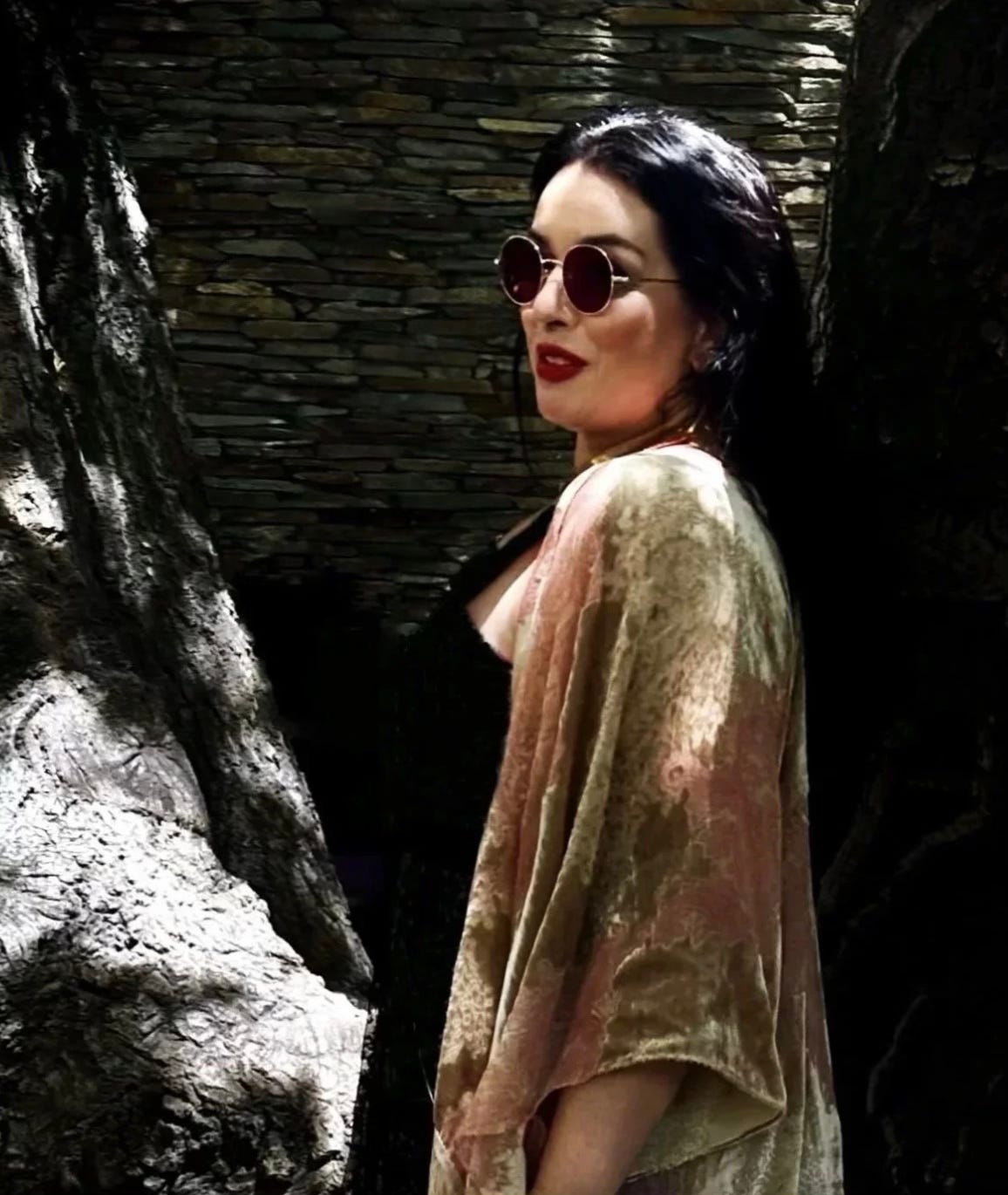
Shireen Qudosi is a writer, women’s-rights advocate, and counter-extremism practitioner whose work has focused on challenging religious and ideological systems that restrict human freedom, particularly the freedom and agency of women.
For more than two decades, Qudosi has worked at the intersection of Islam, women’s rights, culture, and religious reform. Her advocacy has addressed the treatment of women under patriarchal interpretations of Islam, including practices and systems that exert control over women’s bodies and autonomy. Her broader women’s-rights work has included advocacy against female genital mutilation (FGM) and engagement with questions of religious coercion, compulsory modesty, and the cultural and ideological structures used to justify the subordination of women.
As a Muslim reformer, Qudosi has argued for reform emerging from within Muslim communities rather than treating Muslims as passive subjects of either Islamist authority or outside intervention. She has written extensively about reform, religious identity, hijab, women’s autonomy, political Islam, and the need to challenge entrenched interpretations of faith while preserving the individual’s freedom to determine how—or whether—religion belongs in their life.
Her counter-extremism work expanded that inquiry beyond Islam. Qudosi has studied radicalization, recruitment, ideological extremism, and the human vulnerabilities that allow extremist movements to take root. Her work has emphasized prevention and community resilience: understanding the need for identity and belonging that extremist movements exploit and developing interventions before those vulnerabilities become pathways into ideological violence.
In 2016, Qudosi testified before the U.S. House Committee on Homeland Security during a hearing on radicalization and terrorism, identifying herself in her prepared testimony as a Muslim reformer and arguing that Muslim reformers and other internal change agents were essential to confronting extremist ideology. Her later counter-extremism work included community resilience initiatives bringing together stakeholders from faith, education, civic leadership, and law enforcement, as well as public conversations about women in extremism and the role of identity, belonging, and psychological vulnerability in radicalization.
Over time, Qudosi’s work evolved from fighting individual manifestations of extremism toward examining the deeper architecture beneath them: how systems of belief acquire authority, how identities become rigid, how human beings surrender sovereignty to ideological structures, and how another relationship to faith and belonging might be imagined.
That evolution eventually became the foundation for her writing on the sacred feminine and The Song of the Human Heart, which approaches Islamic reform through story, mythology, mysticism, and the recovery of dimensions of Islam obscured by patriarchal and political interpretations of the faith.
